Rainwater Tank Installation In The Northern Rivers: Which Tank Type Is Right For Your Property?
Deciding to install a rainwater tank on your Northern Rivers property is the easy part. The decision that trips most homeowners up is what comes next: which type of tank, what size, and whether you need any approvals before the plumber arrives. This guide covers each of those questions with specific reference to hinterland and acreage properties in the Northern Rivers, where the conditions make some tank types a better choice than others.
Why the Northern Rivers Is Well Suited to Rainwater Collection
The Northern Rivers receives some of the highest annual rainfall in New South Wales, and a significant proportion of properties in the region sit on acreage with corrugated iron or Colorbond roofing. These roofing materials are well suited to rainwater collection, providing a large catchment area that feeds directly into the tank system. In practical terms, this means most Northern Rivers hinterland properties can collect and store enough water to meaningfully offset their mains water use, particularly for toilet flushing, laundry, garden irrigation and outdoor tap use.
The challenge specific to this region is summer heat. Average temperatures through January and February, combined with high humidity, create conditions where poly tanks installed in direct sun can develop algae if the water is stored long-term for drinking use. Understanding how the tank material and positioning interact with the local climate is part of selecting the right system.
The Four Main Tank Types: Poly, Concrete, Colorbond and Stainless Steel
Cape Byron Plumbing installs all four main tank types across the Northern Rivers. Here is how each compares for local conditions:
Poly (Polyethylene) Tanks
The most affordable and widely installed tank type. Poly tanks are lightweight, available in a wide range of sizes and colours, and can be positioned in most locations including on sloped sites. The main consideration for Northern Rivers properties is heat exposure: a poly tank in direct summer sun will warm the water, which can promote algae growth if the tank is used for drinking water. Installing poly tanks in a shaded position, or using a dark-coloured tank that inhibits light penetration, addresses this in most situations.
Concrete Tanks
The most common choice for underground installation and for properties where thermal stability matters. Concrete tanks stay significantly cooler than poly tanks in summer, making them well suited for drinking water storage on Northern Rivers acreage properties. They are heavier and more costly to install but offer a very long service life and are not susceptible to UV degradation.
Colorbond (Corrugated Steel) Tanks
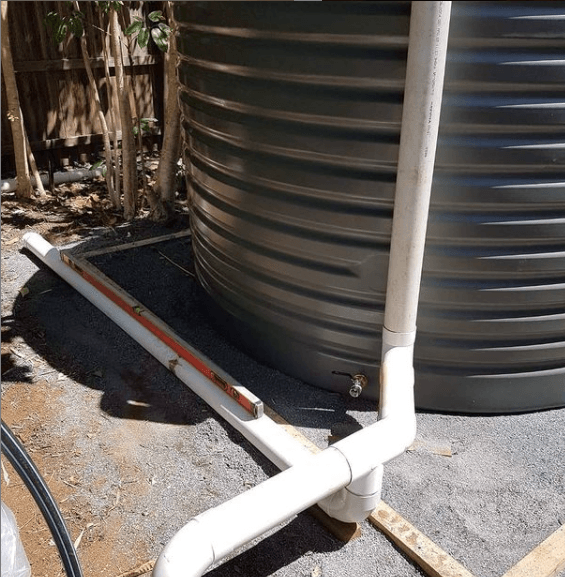
Colorbond tanks suit properties where the tank is visible and the owner wants it to complement the home or shed aesthetic. They are robust, long-lasting and available in the full Colorbond colour range. Like concrete, steel tanks maintain a lower internal temperature than poly in summer heat, making them a practical choice for drinking water use. Installation requires a concrete slab base.
Stainless Steel Tanks
The premium option, suited to tight footprint sites where a slim-profile tank is required. Stainless steel tanks are extremely durable, maintain good water quality and are available in slimline configurations that fit in narrow side passages or under decks. They carry the highest purchase price but require minimal maintenance over their lifespan.
What Size Rainwater Tank Do You Need?
The most common installations Cape Byron Plumbing completes across the Northern Rivers are 10,000 to 25,000 litre systems. The right size for any given property depends on three factors: the size of the roof catchment area, the intended uses for the harvested water, and the available space on site.
A general guide: a 10,000 litre tank suits a standard suburban or small acreage property using the water for toilet flushing, laundry and outdoor taps. A 20,000 to 25,000 litre tank is appropriate for larger properties where the tank also supplements the hot water system, or where the property is off-grid for extended periods between rain events. For drinking water use, the supply needs to be matched to household consumption so the water does not sit in the tank long enough to deteriorate.
What Gets Connected and How the System Works
A rainwater tank is not simply a storage vessel connected to a single outlet. A properly installed system includes a first-flush diverter, which discards the initial roof runoff from each rain event before the cleaner water is directed to the tank, a pump to deliver pressure to the connected points, and connection to the nominated end uses in the home. Common connection points include:
- Toilet cisterns
- Cold water feed to the washing machine
- External taps for garden and irrigation use
- Hot water system (where the property is on tank-only supply or where the owner chooses this for full independence from mains)
Our rainwater tanks service covers supply, delivery and full plumbing connection including first-flush diverters and pump systems across the Northern Rivers.
Development Approval and Compliance: What You Need to Know
In New South Wales, tanks with a capacity of more than 10,000 litres require a development application through the relevant local council before installation. All plumbing work associated with a rainwater tank installation must comply with AS/NZS 3500.1.2, the Australian standard for cold water services, which governs the connection of rainwater harvesting systems to fixtures and appliances.
Council areas in the Northern Rivers have their own planning instruments, and the specific requirements for DA approval vary between Ballina, Byron, Lismore and Richmond Valley councils. A licensed plumber familiar with local planning requirements can advise on what approvals are needed for your specific property before any work begins.
Council Rebates for Rainwater Tank Installation in the Northern Rivers
Residents in the Ballina, Byron, Lismore and Richmond Valley council areas may be eligible for a rebate of up to $2,170 toward the cost of a new rainwater tank installation. The rebate is administered through the relevant council and is subject to the tank meeting minimum size and connection requirements.
Cape Byron Plumbing assists customers with the rebate application process. We can confirm eligibility and connection requirements at the time of your initial consultation and provide the documentation needed to support the application. If you are planning a tank installation, it is worth confirming rebate eligibility before finalising the tank type and size, as the rebate conditions specify minimum specifications.
How Much Does Rainwater Tank Installation Cost in the Northern Rivers?
Installation cost varies depending on the tank type, size, site conditions, the number of connection points and whether the site requires any earthworks for tank placement. As a general framework:
- Tank supply: poly tanks are the lowest cost option, with concrete, Colorbond and stainless steel progressively higher
- Installation labour: includes delivery, placement, base preparation where required, plumbing connections and commissioning
- Pump system: required for pressurised delivery to internal fixtures; pump specification affects both upfront cost and ongoing running cost
- DA fees: applicable for tanks over 10,000 litres, payable to the relevant council
Contact us for a site-specific quote. Installation costs vary significantly between properties depending on access, site conditions and the scope of connection work required.
Installing a Rainwater Tank on Your Northern Rivers Property
If you are still weighing up whether a tank is right for your property, our overview of the benefits of installing a rainwater tank in Ballina covers the water savings and rebate considerations relevant to Northern Rivers properties.
Cape Byron Plumbing supplies and installs rainwater tanks throughout the Northern Rivers areas, such as Byron Bay, Ballina, Mullumbimby and Bangalow. Get in touch to discuss tank type, size, rebate eligibility and DA requirements for your specific property.
Our Service Areas








Recent Posts